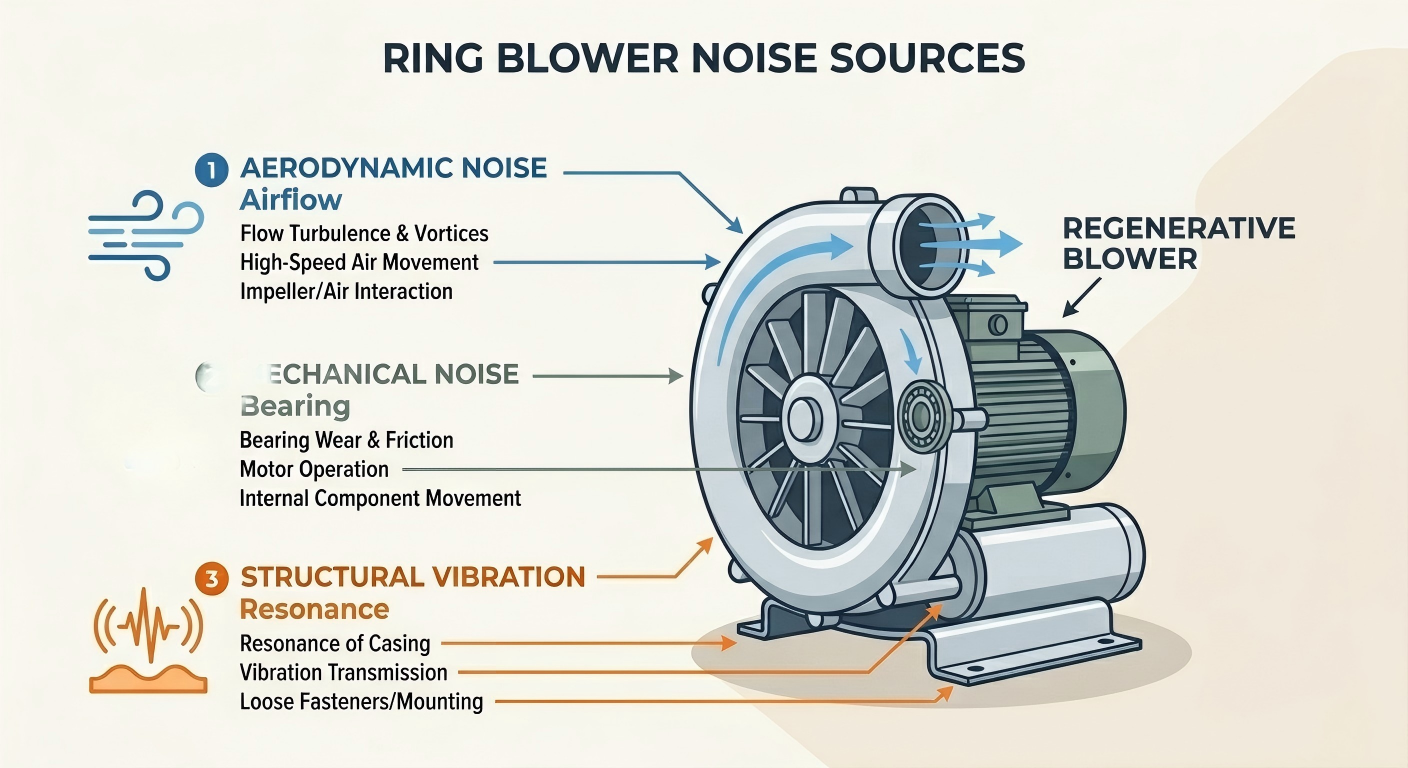
For a side channel blower, maximum pressure and maximum vacuum are two key performance values.
A simple test can be used to check them:
The principle is simple, but the test should only be performed briefly because a side channel blower depends on airflow for cooling.
Maximum pressure is the highest positive pressure a side channel blower can generate when airflow approaches zero.
As the outlet becomes restricted:
When the outlet is completely blocked, the blower reaches approximately its maximum pressure.
For example, if the specification shows:
Maximum Pressure: 400 mbar
the blower may reach around 400 mbar during a short blocked-outlet test.
However, this does not mean it should continuously operate at 400 mbar.
Prepare:
Install the pressure gauge on the blower outlet.
A simple setup is:
Blower Outlet → Pressure Gauge → Valve
Then:
At the blocked condition:
Airflow ≈ 0
Pressure ≈ Maximum Pressure
Do not keep the outlet blocked for a long period.
Maximum vacuum is the highest negative pressure the blower can generate on the suction side.
When the inlet becomes restricted, less air enters the blower and the inlet pressure drops below atmospheric pressure.
When the inlet is completely blocked, the blower approaches its maximum vacuum.
For example:
Maximum Vacuum: -300 mbar
means the blower may reach approximately -300 mbar during a short blocked-inlet test.
Install a vacuum gauge on the inlet side.
A simple setup is:
Valve → Vacuum Gauge → Blower Inlet
Then:
At this condition:
Airflow ≈ 0
Vacuum ≈ Maximum Vacuum
Again, the inlet should only remain blocked for a short time.
A side channel blower uses a rotating impeller to repeatedly accelerate air inside the side channel.
When the outlet is open, the blower mainly produces airflow.
As the outlet becomes restricted, resistance increases and airflow decreases. More of the blower's energy is converted into pressure.
Therefore:
Open Outlet → Higher Airflow, Lower Pressure
Blocked Outlet → Near-Zero Airflow, Maximum Pressure
The same principle applies on the suction side.
The blower continuously tries to draw air into the inlet.
When the inlet is restricted, less atmospheric air can enter, so the pressure inside the suction line decreases.
Therefore:
Open Inlet → Higher Airflow, Lower Vacuum
Blocked Inlet → Near-Zero Airflow, Maximum Vacuum
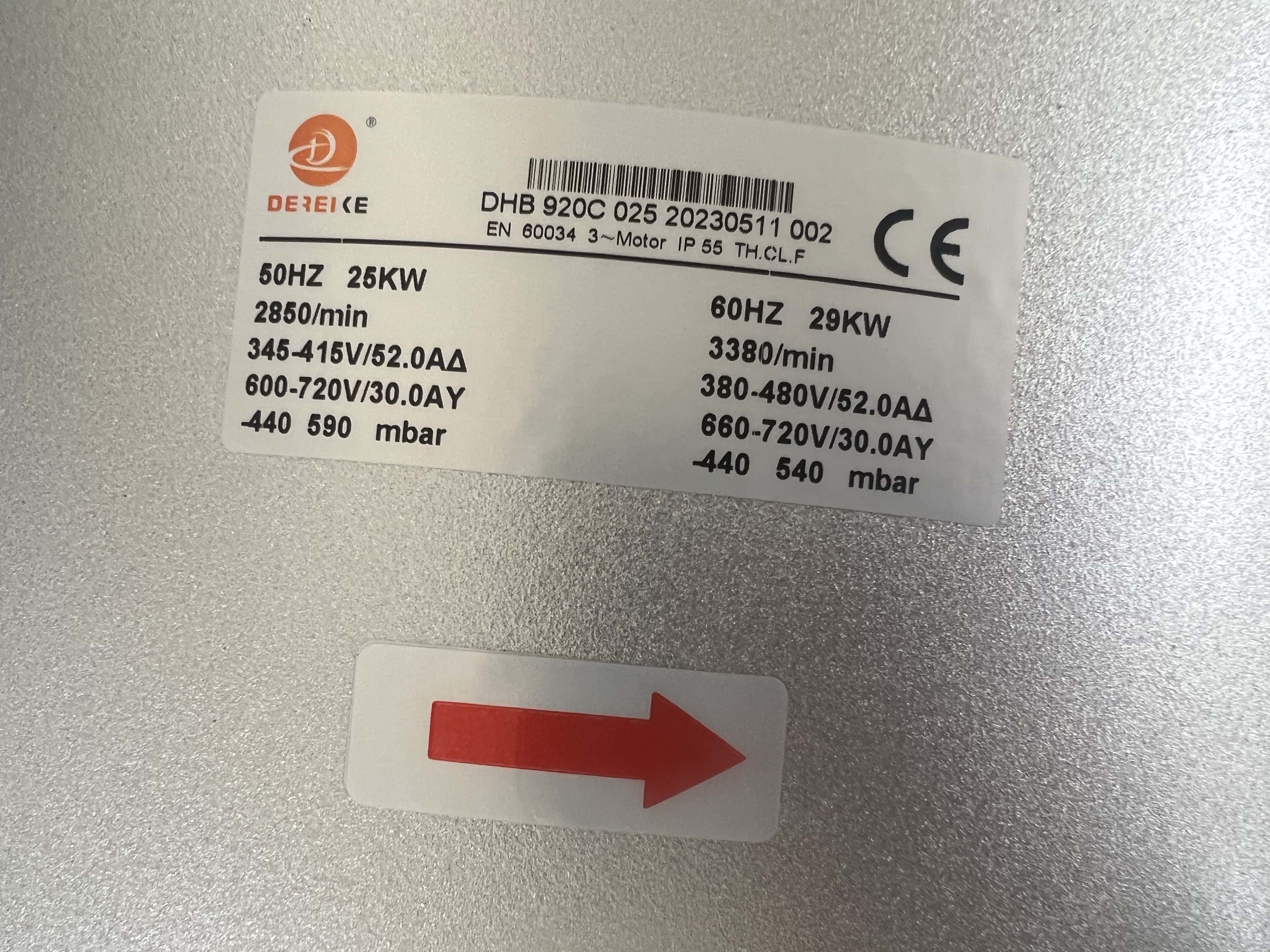
One important point is that maximum pressure is not the same as normal working pressure.
For example, a blower may have:
This does not mean it can provide 500 m³/h at 400 mbar.
Maximum airflow normally occurs at low resistance, while maximum pressure occurs when airflow is close to zero.
The actual blower selection should always be based on:
Required Airflow + Required Pressure or Vacuum
For example, if an application needs:
300 m³/h at 250 mbar
you should check the blower's performance curve to confirm that it can still provide 300 m³/h at 250 mbar.
Side channel blowers generate heat during operation.
When the inlet or outlet is blocked:
Long periods of blocked operation can cause:
For this reason, blocked-inlet and blocked-outlet tests should only be used as short performance checks.
If the measured pressure or vacuum is lower than expected, check:
For a three-phase blower, incorrect phase sequence can cause reverse rotation and lower performance.
Incorrect voltage or frequency can affect motor speed and blower output.
Leaks in hoses, valves, fittings, or gauge connections can reduce the measured pressure or vacuum.
Use a pressure or vacuum gauge with a suitable measuring range.
Testing a side channel blower is straightforward:
These tests show the blower's approximate performance limit under near-zero airflow conditions.
However, maximum pressure and maximum vacuum should not be treated as normal operating points.
For actual blower selection, always check the required:
The most important question is not simply:
What is the blower's maximum pressure?
Instead, ask:
How much airflow can the side channel blower provide at the actual working pressure?
上一篇:没有了
下一篇:没有了