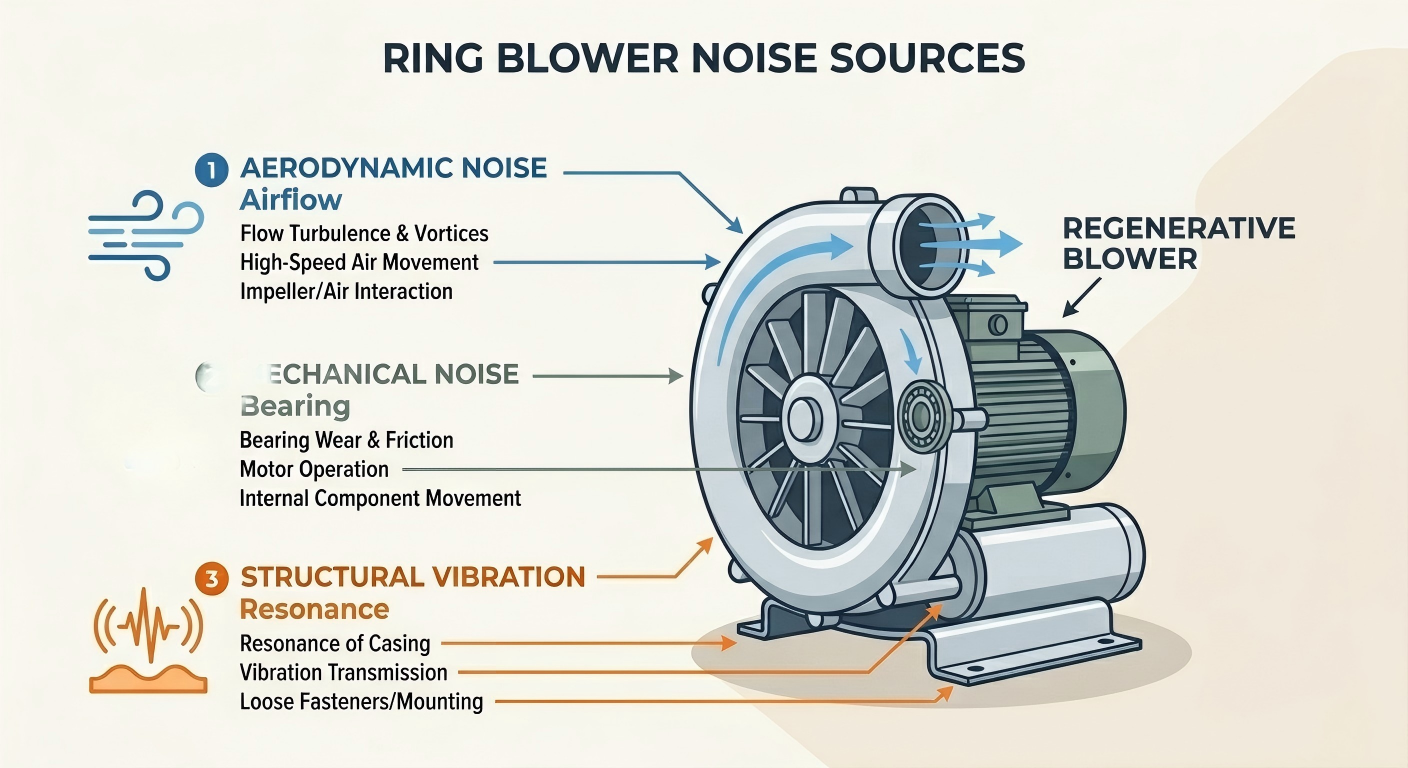
This comprehensive guide presents a technically grounded, commercially focused overview of side channel blowers, detailing their operating principles, performance parameters, configuration options, selection criteria, and maintenance considerations—positioning this resource as a benchmark reference in the field.
The impeller, mounted directly on the motor shaft, rotates at high speed within a precisely machined housing. As air enters the inlet:
It is captured between impeller blades.
Centrifugal force pushes the air outward into the side channel.
The geometry of the channel forces the air back toward the blade root.
This process repeats multiple times, progressively increasing pressure.
This regenerative loop enables higher compression ratios without the complexity of multi-stage centrifugal systems.
Single-stage blowers are suitable for moderate pressure or vacuum requirements.
Dual-stage blowers incorporate two impellers in series to achieve higher differential pressures.
Dual-stage designs are preferred in demanding applications such as pneumatic conveying of granular materials or central vacuum systems.
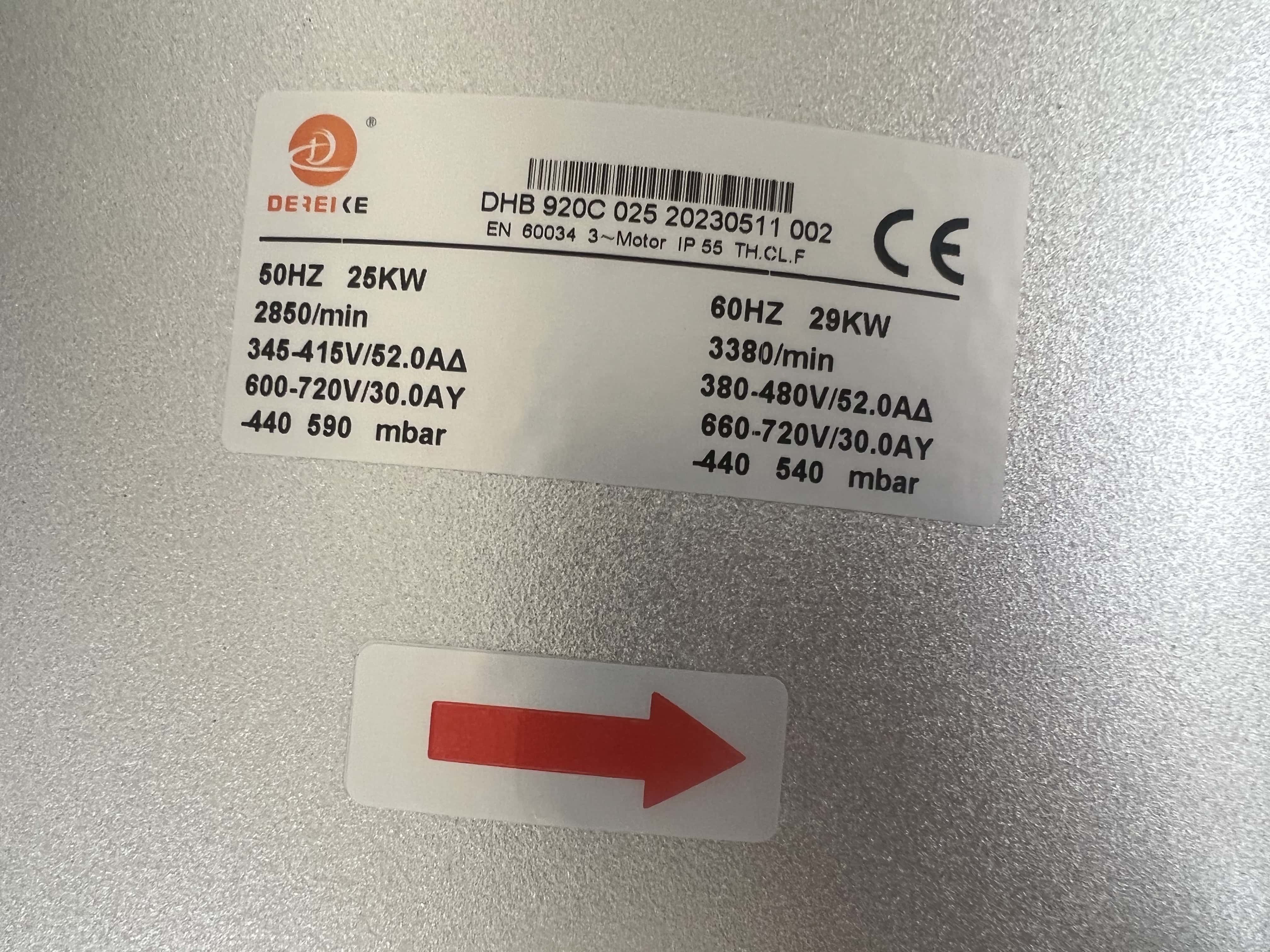
Understanding performance metrics is critical when evaluating side channel blowers.
Defines volumetric capacity. Selection must align with system resistance and required throughput.
Indicates peak pressure capability. Exceeding rated pressure can cause thermal overload.
Specifies suction capability. High-vacuum variants are optimized for material handling and lifting.
Determines energy consumption and torque output. Efficiency is directly related to load matching.
Typically ranges between 2800–3500 RPM (50Hz) or 3400–3600 RPM (60Hz). High-speed variants increase pressure potential but require enhanced cooling design.
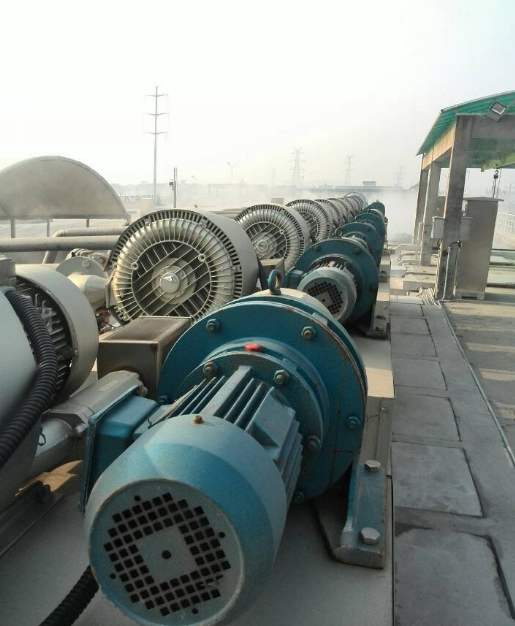
In biological treatment processes, consistent oxygen transfer is essential. Side channel blowers provide oil-free air supply for:
Activated sludge tanks
MBBR (Moving Bed Biofilm Reactor) systems
SBR (Sequencing Batch Reactor) processes
Their stable pressure curve ensures efficient oxygen diffusion without pulsation.
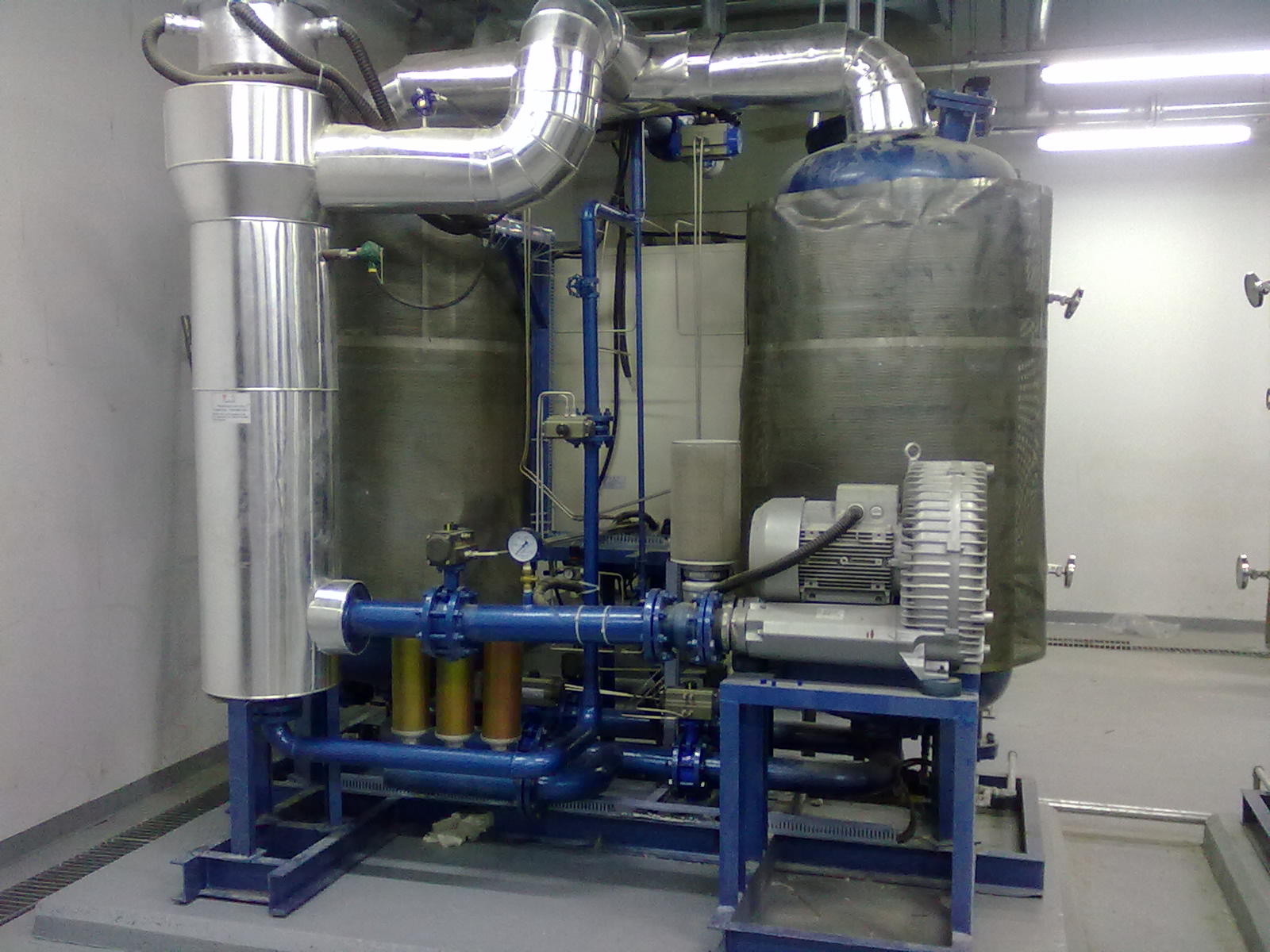
Used for transporting powders, pellets, and granules in:
Food processing
Chemical manufacturing
Plastic compounding
The blower’s vacuum mode allows safe, contamination-free transfer.
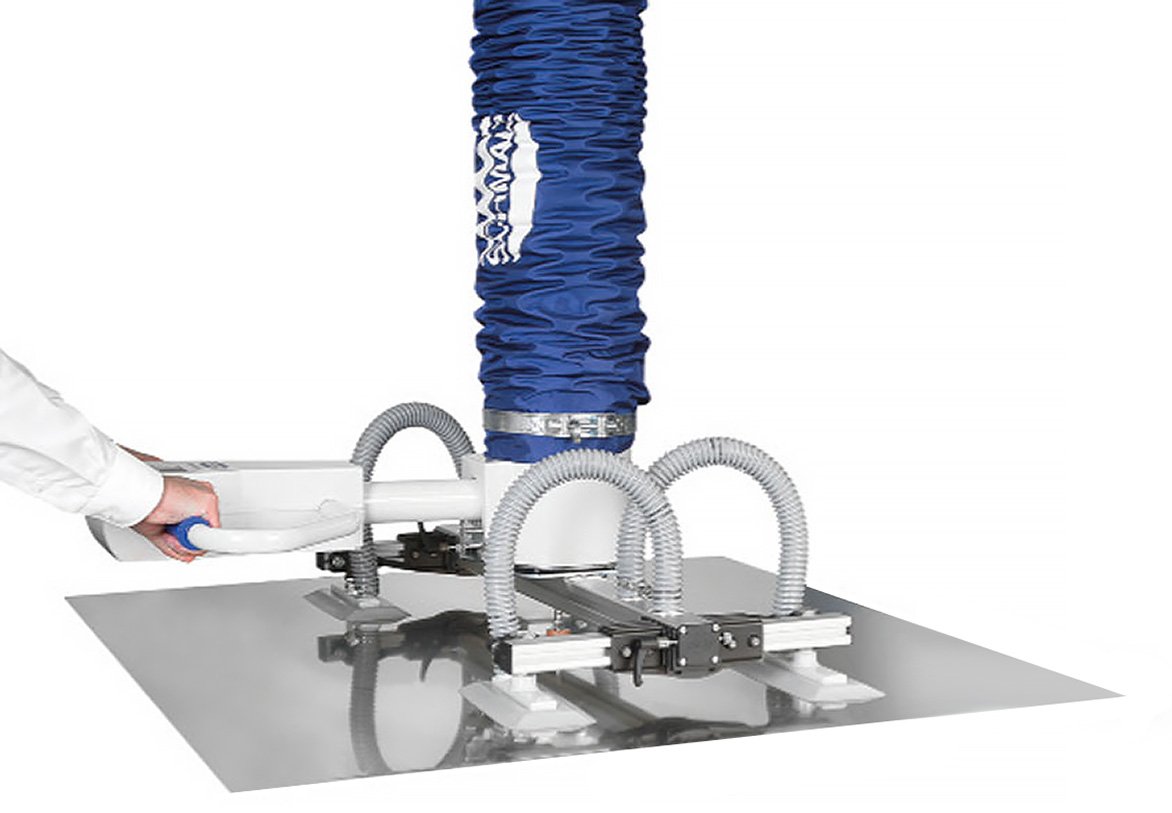
Industries rely on regenerative blowers for:
Glass sheet lifting
CNC vacuum tables
PCB board handling
Oil-free operation prevents surface contamination.

Continuous aeration supports dissolved oxygen levels. The durability and quiet operation of side channel blowers make them ideal for 24/7 aquatic environments.
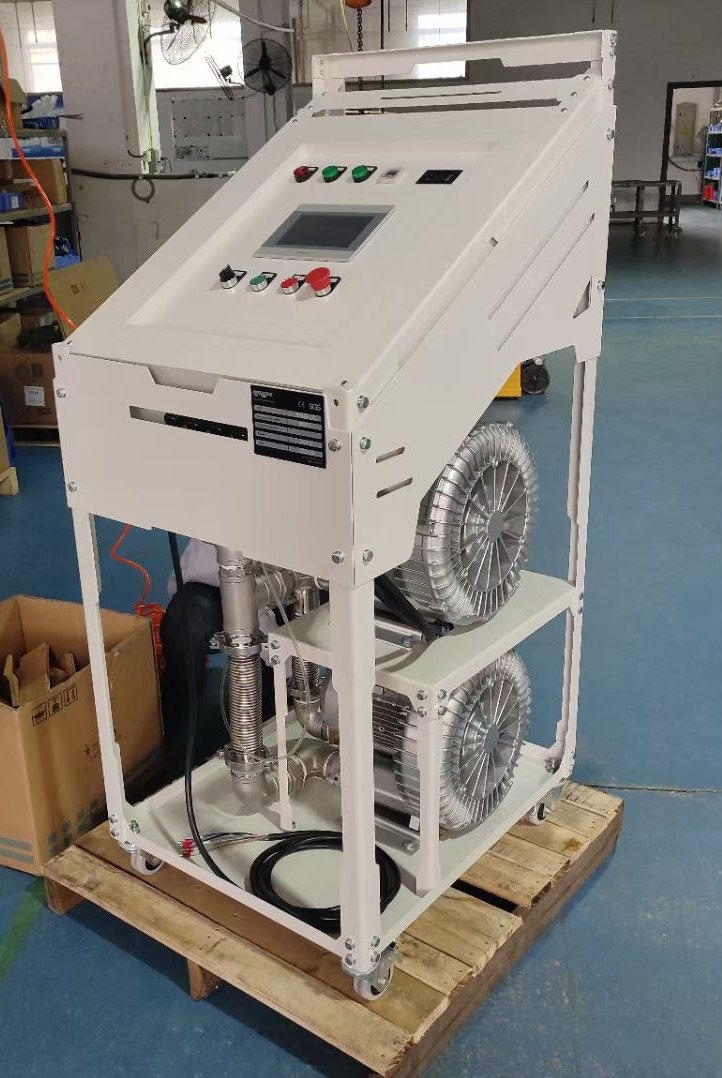
Clean air delivery is essential in:
Dental suction units
Analytical instrumentation
Medical vacuum systems
Compliance with manufacturing standards such as those governed by the International Organization for Standardization ensures quality and repeatability.
No lubrication inside the compression chamber eliminates contamination risks. This makes them suitable for sensitive industries such as pharmaceuticals and food processing.
With minimal wear components—primarily bearings—maintenance cycles are extended compared to positive displacement blowers.
The integrated motor-impeller configuration reduces footprint and simplifies installation.
Acoustic performance is superior to many traditional blowers, particularly when fitted with silencers.
Optimized blade geometry and aerodynamic housing minimize turbulence losses, improving operational efficiency.
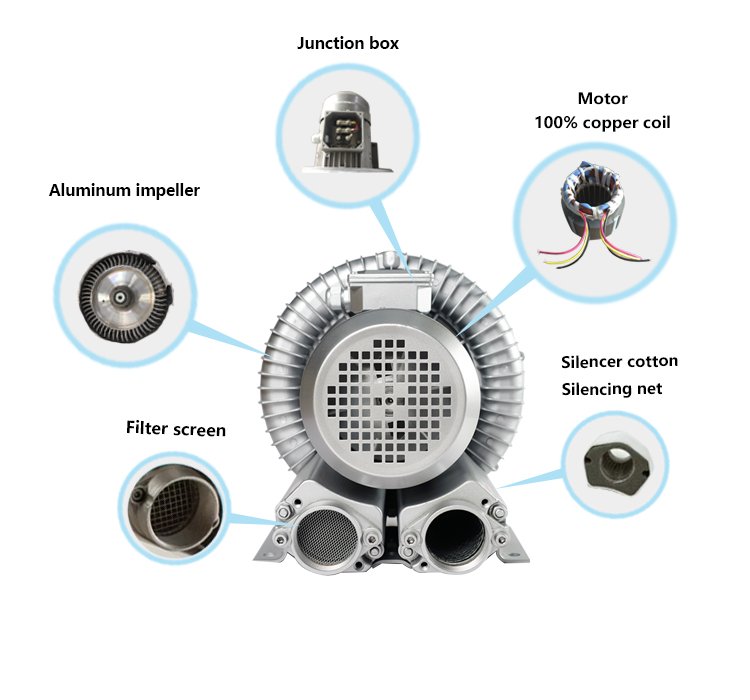
Most side channel blowers use die-cast aluminum for:
Lightweight construction
Effective heat dissipation
Corrosion resistance
High-tolerance machining ensures:
Minimal internal clearance
Enhanced compression efficiency
Reduced mechanical vibration
Anodizing or protective coatings increase durability in corrosive environments.
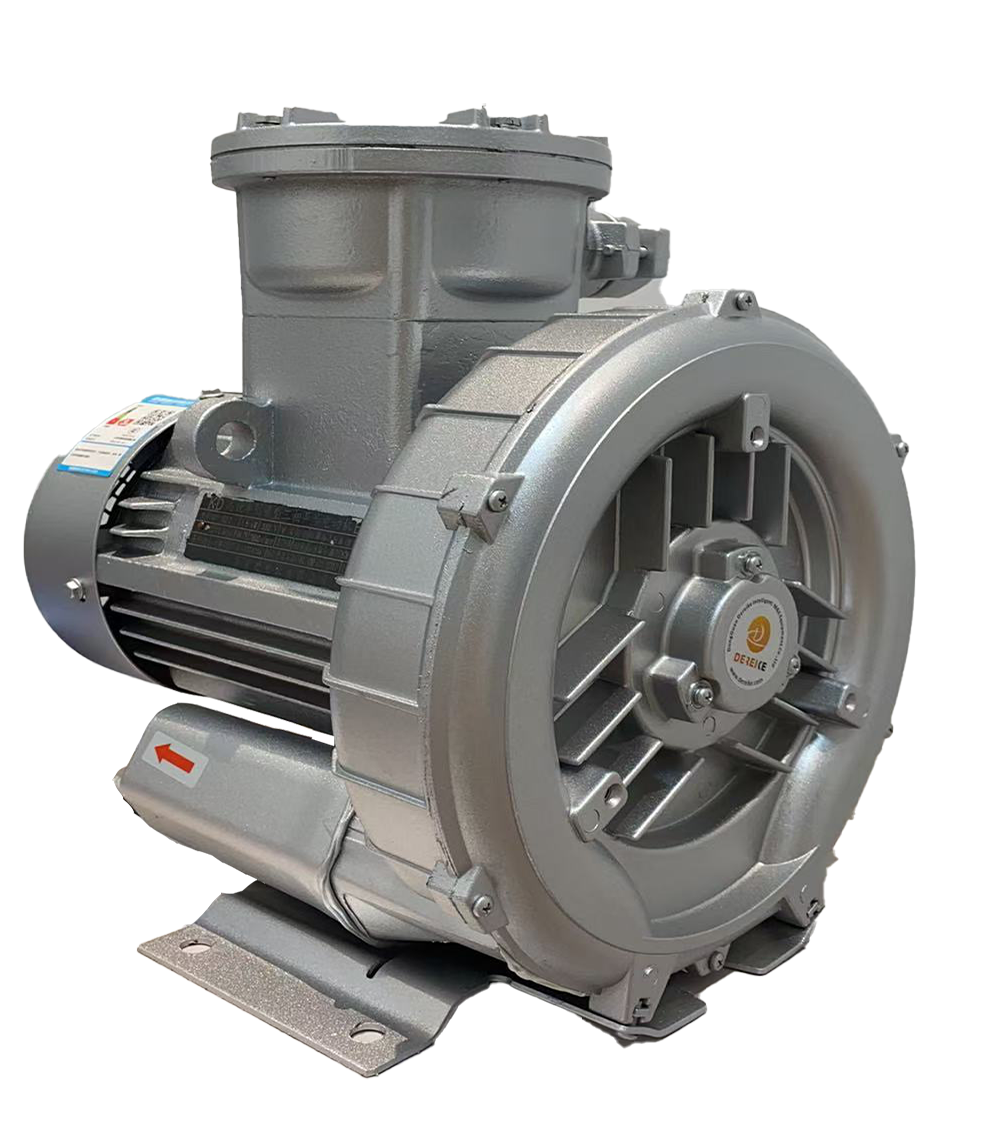
For hazardous environments containing flammable gases or dust, ATEX-certified blowers are essential. Compliance with directives issued under the authority of the European Union ensures safe operation in classified zones.
Explosion-proof models include:
Anti-spark impellers
Reinforced housing
Certified motors
These are widely used in chemical plants and solvent handling facilities.
Required airflow
Required pressure or vacuum
Continuous vs. intermittent operation
Pipeline length, filter elements, and diffusers impact total pressure drop.
Ambient temperature
Altitude (affects air density)
Humidity
Global projects may require 50Hz or 60Hz compatibility.
Indoor installations may require additional acoustic control.
Proper selection prevents oversizing, which increases energy consumption and heat generation.
Install on a flat, vibration-resistant base.
Ensure adequate ventilation clearance.
Avoid inlet restrictions.
Use appropriate filters to prevent particulate ingress.
Install pressure relief valves for system protection.
Correct installation significantly extends equipment lifespan.
Although side channel blowers require minimal maintenance, periodic checks are essential:
Replace bearings according to manufacturer service intervals.
Blocked filters reduce airflow and increase temperature.
Operating beyond thermal limits shortens motor life.
Unusual vibration indicates imbalance or bearing wear.
Preventive maintenance ensures uninterrupted industrial processes.
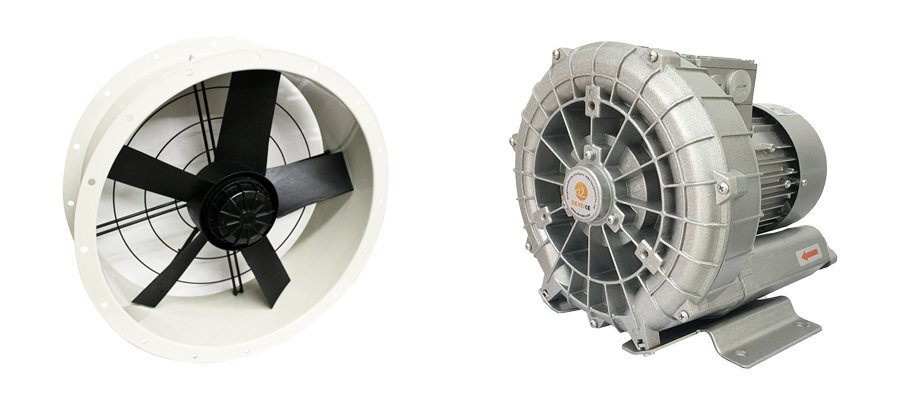
| Feature | Side Channel Blower | Roots Blower | Centrifugal Fan |
|---|---|---|---|
| Oil-Free | Yes | Often requires lubrication | Yes |
| Pressure Capability | Medium-High | High | Low-Medium |
| Maintenance | Low | Moderate | Low |
| Pulsation | Minimal | Noticeable | Minimal |
| Footprint | Compact | Larger | Compact |
Side channel blowers bridge the performance gap between centrifugal fans and positive displacement blowers, offering a balanced solution for mid-range pressure requirements.
Initial purchase cost represents only a portion of total ownership expense. Energy consumption over years of operation dominates lifecycle cost. Selecting a correctly sized regenerative blower:
Reduces power draw
Minimizes overheating
Enhances motor longevity
Optimized airflow matching improves ROI in industrial installations.
Side channel blowers represent a technologically mature, operationally reliable solution for applications requiring consistent airflow or vacuum under moderate-to-high pressure conditions. Their oil-free operation, compact footprint, and low maintenance profile make them a strategic asset in modern industrial systems.
This article establishes a definitive standard for technical depth and commercial clarity in the discussion of regenerative blowers, delivering authoritative insight designed to surpass competing resources in precision and comprehensiveness.